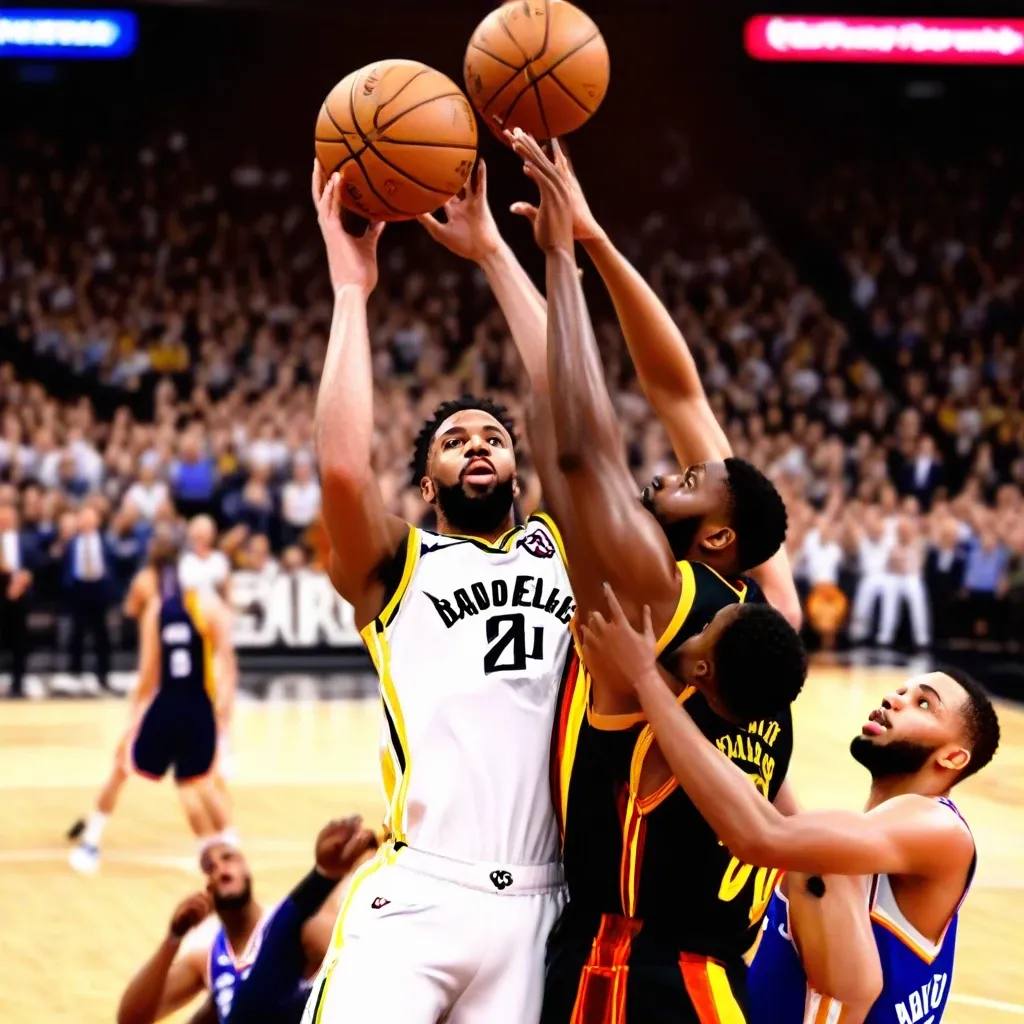
The NBA Conference Finals represent the pinnacle of competition within each conference, a crucible where only the most resilient and skilled teams survive. It’s a moment where legacies are forged, dreams realized, and heartbreak endured. The journey through the NBA Playoffs culminates in this intense showdown, a best-of-seven series that decides who will represent their conference in the ultimate battle for the NBA Championship.
Typically, you’ll see a mix of perennial powerhouses and rising contenders battling it out. Teams that have meticulously crafted their rosters, honed their strategies, and demonstrated unwavering teamwork throughout the regular season and earlier playoff rounds. The Conference Finals often serve as a proving ground, separating the good teams from the truly great.
Over the years, there have been many surprising Conference Finals that have defied expectations. One that particularly stands out was when an underdog team managed to upset a heavily favored team, showcasing the unpredictable nature of basketball and the power of believing in yourself. It was a reminder that in the playoffs, anything can happen, and that’s what makes it so captivating.
Understanding the Conference Finals Landscape
The Conference Finals mark the penultimate stage of the NBA playoffs, a hard-fought battle where the remaining teams from each conference vie for a coveted spot in the NBA Finals. This best-of-seven series pits the top two teams from the Eastern and Western Conferences against each other, demanding both skill and grit from every player on the court. At stake is more than just bragging rights; it’s a chance to compete for the ultimate prize – the NBA title. The team that wins the Conference Finals gets the opportunity to play against the winner of the other conference. Adding another layer of prestige, is the Conference Finals Most Valuable Player Award, honoring the player who has performed exceptionally well during the series. In addition, the Eastern Conference Champion wins Bob Cousy Trophy and the Western Conference champion wins Larry Bird Trophy. The Conference Finals embodies the spirit of competition and is a thrilling spectacle for basketball fans worldwide.
The Road to the Finals: A Conference Overview
The journey to the Conference Finals is a gauntlet that tests every team’s mettle. It all begins with the regular season, where teams battle for playoff seeding based on their win-loss record within their respective conference. The top six teams from each conference automatically qualify for the playoffs, while teams ranked 7-10 participate in a play-in tournament to secure the final two playoff spots. This play-in format adds an extra layer of excitement and unpredictability, giving lower-seeded teams a fighting chance to advance. Playoff seeding matters a lot and a higher seed guarantees home-court advantage in a series. Once the playoff bracket is set, teams engage in best-of-seven series in the first round, the conference semifinals, and finally, the Conference Finals. We have seen teams overcoming the odds. For instance, a lower-seeded team might defy expectations by upsetting a top seed in the first round, setting the stage for their improbable run to the Conference Finals.
Key Matchups to Watch
The intensity of any playoff series hinges on critical player matchups. These aren’t just about star power; they are about exploiting weaknesses and neutralizing strengths. Examining these battles offers a glimpse into the strategic chess match that will determine the series outcome. For instance, a high-scoring guard facing a defensive specialist can dramatically shift the momentum of a game. Understanding who needs to step up and how they plan to do it is the heart of playoff basketball. Expect to see adjustments as teams probe for vulnerabilities and capitalize on favorable situations. Specific matchups will determine the series trajectory.
Focusing on star players is critical, but don’t ignore the under-the-radar matchups either. Often, a team’s unsung hero can disrupt the opposing team’s rhythm, creating opportunities and influencing the final score. It’s all about those hidden advantages and unexpected contributions. These battles include guarding the paint, boxing out for an important rebound, or making that crucial steal.
Offensive Genius vs. Defensive Mastermind
Playoff basketball transforms into a high-stakes chess game, where offensive genius clashes with defensive prowess. High offensive ratings meet superb defensive ratings as teams leave everything on the court. The ability to adapt becomes crucial, particularly when dealing with star players who can change a game in an instant. The series will be dictated by adjustments made when the opposing team shuts down primary options.
Watching a player adapt to a defensive strategy in real-time reveals basketball’s intellectual complexity. It’s not just about physical abilities; it’s about mental agility and tactical thinking. Every possession needs a response, a counter-move, and a calculated risk. This tactical back-and-forth not only elevates the game, but can swing the outcome of an entire series, underscoring the chess-like nature of playoff basketball.

Coaching Strategies and Adjustments
The Art of In-Game Adjustments
Basketball is a game of constant adaptation, and the coaches who thrive are those who can make effective mid-game adjustments. It’s not enough to have a solid game plan; you need to be able to recognize when that plan isn’t working and have the courage to change course. Some coaches stubbornly stick to their original starting five, even when it’s clear the matchups aren’t favorable or a particular player is struggling. This rigidity can be a major disadvantage. Adaptive strategies, on the other hand, involve tweaking play calling, adjusting defensive schemes, or altering player rotations based on what’s happening on the court.
I remember watching a pivotal Conference Finals game where one team’s offense was completely stifled in the first half. At halftime, the coach made a subtle, yet brilliant, adjustment to their pick-and-roll coverage. Instead of hedging hard, they started switching more aggressively, forcing the opposing team’s guards into tougher isolation situations. This single change disrupted the entire offensive flow and ultimately swung the momentum of the game. That’s the power of insightful in-game adjustments; often, the smallest tweaks can have the biggest impact.
Timeout usage is a critical component of coaching acumen. A well-timed timeout can halt an opponent’s run, give your players a mental break, or allow you to diagram a crucial play in a high-pressure situation. Analyzing rotations based on matchups and performance is equally important. A coach might shorten the rotation in the playoffs, relying more heavily on their star players, or they might dig deeper into their bench to find a spark or exploit a specific weakness in the opposing team. These are the tactical battles that often determine the outcome of a series, and the coaches who master these elements have a significant advantage.
X-Factors and Underdog Potential
Hidden Gems: Unearthing the Impact of Underrated Players
Playoff series are often decided, not by the superstars everyone anticipates, but by the x-factors, the role players who rise to the occasion. These are the bench players, the secondary scorers, and the defensive specialists whose contributions often fly under the radar during the regular season. A team’s success hinges on identifying and effectively utilizing these hidden gems.
Consider a player who consistently provides a spark off the bench by attacking mismatches, or a defensive stopper who shuts down the opponent’s key offensive weapon. These individuals can shift the momentum of a game and swing the series in their team’s favor. These underrated players often deliver clutch performances that defy expectations.
The ability to recognize and harness the potential of these players is a hallmark of successful playoff teams. Identifying underrated players can be a winning strategy, turning a good team into a great one. These “Hidden Gems” provide unexpected contributions and are the x-factors for a deep playoff run.

Predicting the Winners: Expert Analysis and Insights
The Data-Driven Approach to NBA Predictions
Predictive analytics has become a cornerstone of modern NBA analysis, offering a quantitative lens through which to assess team strengths and forecast potential outcomes. Statistical models, fueled by vast datasets of player and team performance metrics, generate win probabilities that can inform predictions. Metrics such as offensive and defensive efficiency, pace, and rebounding rates offer valuable insights into a team’s overall effectiveness. However, relying solely on data can be misleading. The human element – coaching decisions, player chemistry, in-game adjustments, and even sheer luck – often defy quantification. Unexpected injuries, a sudden hot streak from an unlikely player, or a controversial referee call can render pre-game statistical advantages irrelevant. Therefore, data serves as a powerful tool, but should be tempered with qualitative analysis and an understanding of the unpredictable nature of basketball.
Making NBA predictions requires a blend of art and science. Extensive knowledge of each team is needed with particular players involved. After a while, it is possible to make a well researched guess of who is going to win. This year playoffs are more interesting than ever. So many teams have a fair chance to win. It is very hard to pick just one winner.
Impact on the NBA Finals
Reaching the NBA Finals is the culmination of a grueling season, etching a team’s name into basketball history. It’s more than just a series of games; it’s a chance to cement a championship legacy. For players, it’s the realization of a lifelong dream, fueled by relentless training and unwavering dedication. For franchises, it represents the pinnacle of success, a testament to strategic planning and exceptional teamwork.
The hunger to win, the desire to hoist the trophy, and the chance to immortalize themselves drive teams competing for the title. Claiming a spot in the NBA Finals immediately elevates a team’s historical context, setting the stage for an epic showdown between the conference champions. They carry the hopes of their city and a burning desire to achieve ultimate glory.
Conclusion
The Conference Finals have reshaped perspectives on championship contenders, providing fans and analysts alike with invaluable insights. These playoffs highlighted the unpredictable nature of the game—a testament to why the NBA captivates audiences globally. As teams evolve, the future of the NBA looks bright, promising more intense battles and unforgettable moments in future Conference Finals.