
Few tennis echoes resonate quite like the Bryan brothers’ electrifying title run at the ATP Rotterdam doubles tournament, a performance showcasing perfect synergy and court mastery. This victory is a testament to the high caliber of play that defines this prestigious indoor event. The ATP Rotterdam doubles tournament is not just another stop on the tour; it’s a battleground where legends are made, and doubles strategies are pushed to their absolute limit.
This article provides an expert analysis of the key ingredients for success at the ATP Rotterdam doubles tournament. From dissecting court dynamics to understanding the tactical nuances required to overcome the unique challenges presented by this competition, the aim is to deliver unique insights. This analysis will give a comprehensive understanding of what it takes to become a champion in Rotterdam.
A Brief History of Doubles at Rotterdam
The Rotterdam Open, a prestigious stop on the ATP Tour, boasts a rich history dating back to its inception in 1972. While singles competition often steals the spotlight, the doubles tournament at Rotterdam has quietly cultivated its own legacy, showcasing exceptional teamwork, strategic brilliance, and thrilling athleticism. From its humble beginnings, the doubles event has mirrored the evolution of professional tennis, adapting to changing player dynamics, scoring formats, and the ever-increasing demands of the sport.
Initially contested on indoor hard courts – a surface that remains a signature of the tournament – the Rotterdam doubles event quickly gained a reputation for fast-paced rallies and decisive net play. Early champions often featured seasoned veterans and emerging talents, eager to test their mettle on the relatively quick surface. These early years established a trend of rewarding aggressive play and seamless court coverage, setting the stage for future generations of doubles specialists.
Over the decades, the tournament has witnessed subtle but significant changes, reflecting broader trends in the game. Adjustments to scoring systems, the increasing emphasis on power and athleticism, and the rise of highly specialized doubles pairings have all left their mark on the Rotterdam doubles landscape. Despite these changes, the tournament has consistently attracted top-ranked teams, drawn by the allure of competing in a historic venue and the opportunity to claim a coveted title. The list of past winners reads like a who’s who of doubles legends, a testament to the tournament’s enduring appeal and its significance in the world of professional tennis.
Key Doubles Teams and Memorable Matchups
Dominant Duos Through the Decades
The Rotterdam Open has witnessed the rise of exceptional doubles teams, etching their names into the tournament’s rich history. These tennis partnerships, forged through skill, strategy, and unwavering teamwork, consistently captivated audiences with their synchronized play and relentless pursuit of victory.
One such duo that dominated the courts was the formidable pairing of Paul Haarhuis and Jacco Eltingh. This Dutch dream team, playing in front of their home crowd, showcased impeccable court coverage and devastating net play. Their trophy haul includes multiple Rotterdam Open titles, solidifying their legacy as one of the most successful teams to grace the tournament. Statistics reveal their dominance, showcasing consistent high rankings and a remarkable win-loss record throughout their time together.
Another iconic team that left a lasting impact was Daniel Nestor and Nenad Zimonjić. Their contrasting styles – Nestor’s crafty finesse and Zimonjić’s booming power – blended seamlessly, creating a dynamic force that opponents struggled to contain. Their success at Rotterdam, marked by strategic brilliance and clutch performances, contributed significantly to their overall Grand Slam achievements and cemented their place among the elite doubles teams.
What made these partnerships so effective? Beyond individual talent, their success stemmed from deep-rooted chemistry and an innate understanding of each other’s strengths and weaknesses. Their ability to anticipate each other’s movements, coupled with unwavering communication and a shared commitment to excellence, proved to be the key ingredients in their recipe for championship glory. These are just a couple of the titan duos that showed the tennis world just how dominate partnership can be.
Winning Strategies and Playing Styles
Adapting to the Rotterdam Court
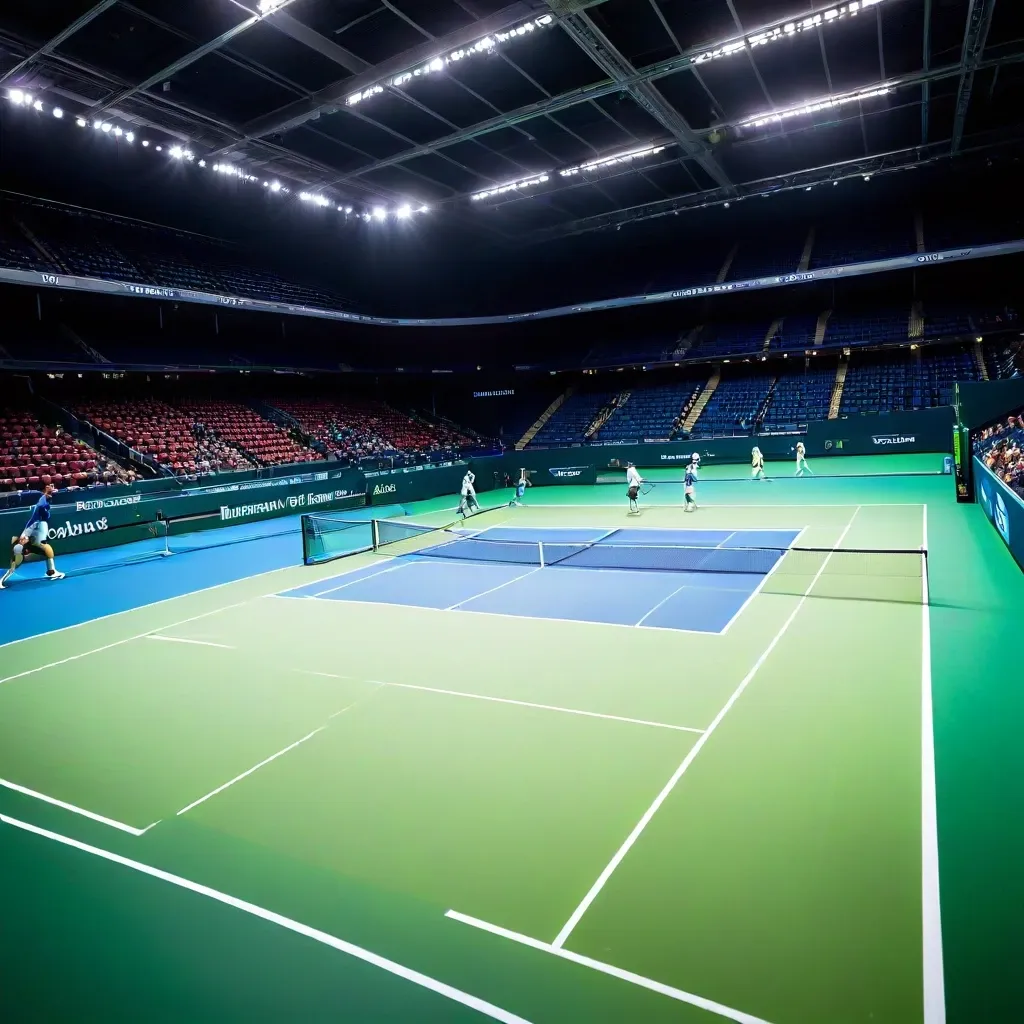
The Rotterdam court, an indoor hard court, presents unique challenges and opportunities that significantly influence match play, demanding keen adaptation from players. The court’s surface typically allows for a faster game due to reduced friction, which favors players with powerful serves. The speed of the court often truncates reaction times, rewarding players who can quickly transition from defensive positions to offensive maneuvers.
Effective adaptation involves several key adjustments. First, players often need to amplify their serve power to gain an edge, aiming for aces or unreturnable serves that immediately put pressure on their opponents. Second, the return game shifts towards blocking and redirecting the ball, exploiting angles to disrupt the server’s rhythm and court positioning. Volleying becomes quicker, requiring sharp reflexes and precise placement to control the net. Court positioning is also crucial; players must anticipate faster ball trajectories and adjust their stance to cover more ground efficiently.
Several players have demonstrated exceptional prowess in adapting to these conditions. For example, players known for their aggressive net play and powerful serves have historically thrived in Rotterdam. Their success underscores the importance of leveraging strengths that align well with the court’s characteristics. Understanding how these players calibrate their game can provide valuable insights for anyone looking to compete effectively on similar indoor hard courts.
Ultimately, successful adaptation hinges on a blend of technical adjustments and strategic thinking. Those who master these nuances often find themselves holding the winner’s trophy.
Doubles Strategy on Indoor Hard Court
Doubles tennis on the Rotterdam indoor hard court necessitates a specialized approach that melds quick reactions, astute positioning, and strategic communication. Due to the court’s faster pace, serve-and-volley tactics gain significant potency. A strong first serve followed by an aggressive move to the net can suffocate opponents, limiting their response options and forcing errors.
Baseline dominance emerges as another viable strategy, particularly for teams with exceptional groundstroke skills. These teams often rely on deep, penetrating shots to push opponents behind the baseline, creating opportunities for angled volleys and overhead winners. Court positioning is paramount; strategic alignment can cut off passing lanes and protect against cross-court attacks. Communication between partners is vital for seamless transitions and coordinated net coverage. Simple verbal cues or hand signals can prevent overlaps and ensure that both players are on the same page.
To illustrate advantageous formations, imagine the server moving towards the net immediately after serving, while their partner positions themselves to cover the cross-court return. This setup allows for quick interception of weak returns and effective net coverage. Alternatively, both players might start at the baseline, using sharp angles and aggressive shot placement to dictate play before one or both transition to the net to finish the point. These strategies require constant adjustment based on the opponents’ strengths and weaknesses, making adaptability a critical asset.
From personal experience, successful doubles play on indoor hard courts boils down to anticipating your partner’s and opponents’ moves, maintaining relentless pressure, and capitalizing on every chance to control the net. Teams that can execute these strategies with precision and adapt to the match’s ebb and flow are the ones most likely to emerge victorious.
Emerging Teams and Future Predictions
The ATP doubles circuit is a constantly evolving landscape, with new partnerships forming and established teams facing fresh challenges. Identifying the emerging teams and predicting future success is no easy task, but by analyzing recent performances, playing styles, and on-court chemistry, some educated guesses can be made about who will rise to the top.
On the Horizon: Doubles Prospects to Watch
Several teams have shown flashes of brilliance, hinting at a potential to become major contenders. One such duo displays explosive power at the net combined with rock-solid baseline play. While their aggressive style can lead to spectacular wins, it also leaves them vulnerable to unforced errors under pressure. Consistency will be their key to unlocking sustained success.
Another team showcases exceptional court coverage and tactical awareness. Their ability to anticipate opponents’ moves and construct points with precision is truly impressive. However, they sometimes lack the raw power needed to dominate opponents outright. Improving their serve and adding a bit more firepower to their groundstrokes could elevate them to the next level.
Rotterdam and Beyond: Making Informed Predictions
Predicting success in a tournament like Rotterdam is a complex equation. Considering the court conditions, the draw, and the current form of all the teams involved. That being said, some educated predictions can be made. One team, known for their experience and composure, is often a strong contender on indoor hard courts. If they are in good physical condition, they could make a deep run in the tournament.
Another team displays a clear upward trajectory, they have the potential to surprise many. Their youthful energy and fearless approach make them dangerous opponents, especially if they can harness their emotions and maintain focus throughout the tournament. While victory in Rotterdam might be a bit premature, don’t be surprised to see them reach the later stages and gain valuable experience.
Ultimately, the beauty of tennis lies in its unpredictability. Upsets happen, underdogs triumph, and new stars emerge when least expected. While these predictions offer some insights into the potential contenders, the real drama will unfold on the court, where skill, determination, and a bit of luck will determine who ultimately lifts the trophy.

The Impact of Rotterdam on Doubles Careers
The ABN AMRO Open in Rotterdam, more than just another stop on the ATP tour, holds a unique position in shaping doubles careers. For many aspiring and established players, success, and sometimes even participation, at Rotterdam has acted as a significant springboard, launching careers to new heights or solidifying their place among the elite.
The tournament’s prestige ensures it attracts top-tier doubles teams, offering invaluable exposure to those looking to make their mark. A strong showing in Rotterdam can translate directly into increased recognition, attracting the attention of sponsors eager to back rising stars. Beyond the financial benefits, the tournament provides a platform to improve rankings substantially.
Consider the hypothetical case of the relatively unknown pairing, let’s call them “Dynamic Duo.” Prior to Rotterdam, they were struggling to gain entry into major tournaments. However, a quarterfinal appearance against a seeded team in Rotterdam changed everything. The exposure gained them a wildcard entry into other ATP events, leading to consistent performances and a steady climb in the rankings. Suddenly, seasoned doubles players were starting to take them seriously. Their success at Rotterdam became the catalyst for a sustained period of growth and recognition on the tour.
Rotterdam’s impact extends beyond just the winners. Even a spirited performance against a top team can boost a player’s confidence and profile. The chance to test skills against the best, in a high-pressure environment, is invaluable for tennis development. Rotterdam, with its enthusiastic crowds and well-organized tournament, creates the perfect stage for doubles players to shine and elevate their careers.
Conclusion
The Rotterdam doubles tournament stands as a testament to the power of partnership, strategy, and unwavering determination in the world of tennis. From legendary champions to rising stars, the event consistently delivers thrilling matches and unforgettable moments. The tournament’s legacy is etched in the annals of tennis history, inspiring future generations of doubles players to strive for excellence. The unique blend of skill, teamwork, and competitive spirit on display each year solidifies Rotterdam’s place as a premier destination for doubles tennis enthusiasts.
The allure of Rotterdam extends beyond the court, offering fans an immersive experience that celebrates the rich tradition of the sport. The roar of the crowd, the precision of the serves, and the intensity of the rallies create an electrifying atmosphere that captivates audiences worldwide. As we look to the future, the Rotterdam doubles tournament remains a shining example of the enduring appeal of tennis and the power of human connection through sport. So, mark your calendars and witness the magic of Rotterdam firsthand. Be there to cheer on your favorite teams and experience the thrill of world-class doubles tennis!